Thursday, January 08, 2015

Tanzania X. Grazers.

Everyone recognizes the big cats, elephants, rhinos, hippos and giraffes. Zebras and Wildebeests are also distinctive, but the rest of the grazers tend to blend together. I decided to do a post of all these animals. The coat markings, coat color, size of the animal and horn size and shape are the distinguishing differences.

The diversity of animals there is so much greater than we have here, and the numbers of animals are way higher. For us it's just white-tailed deer and moose, and the moose are rarely seen.

Birds tomorrow.


Bushbuck ewe. This one we saw at the Ngorongoro Crater Lodge before our first game drive.

Zebras, on the crater rim.

Wildebeest, one of many, many, many.

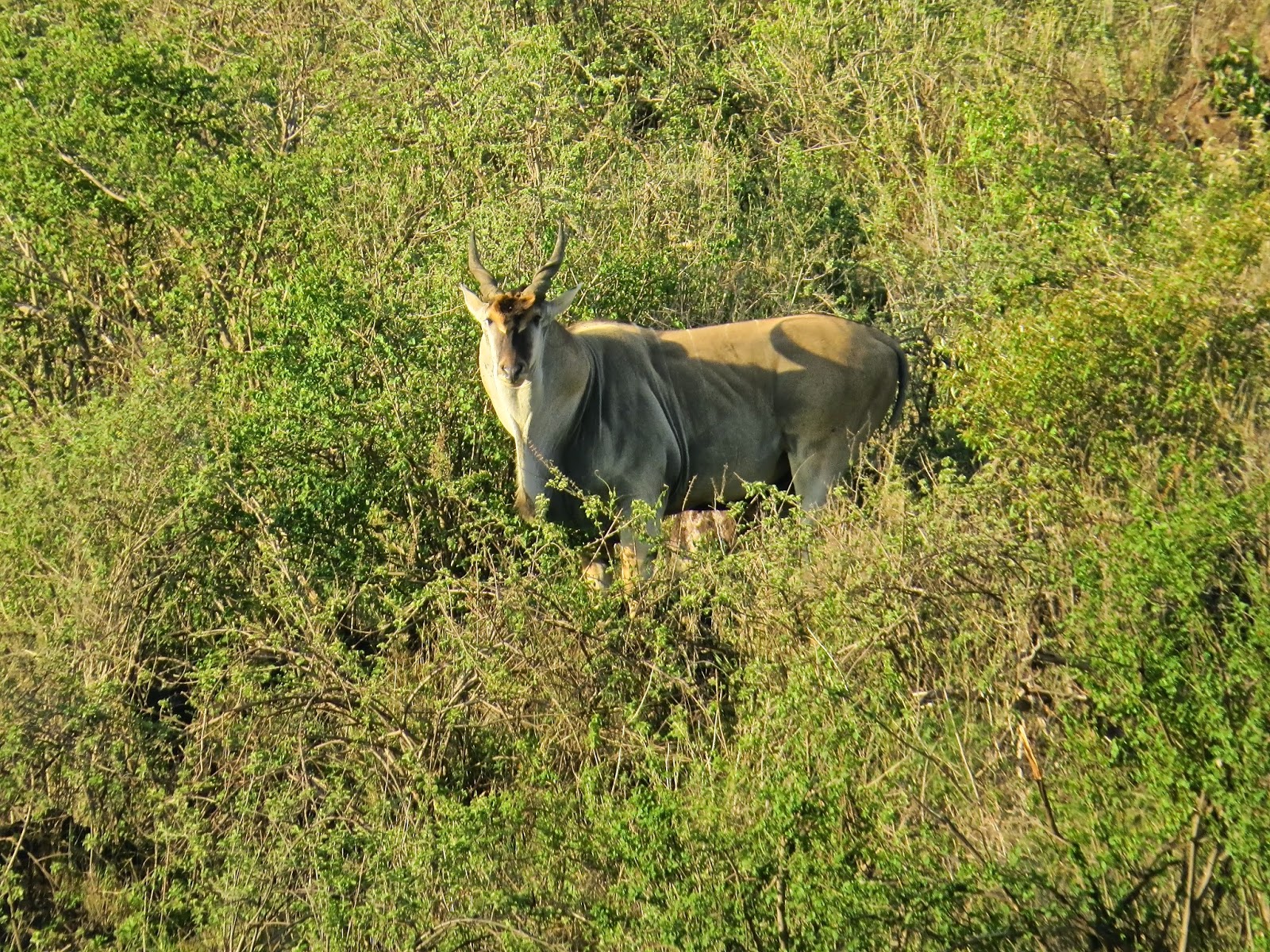
Eland, some were more grey in color.

Grant's gazelle.

Thomson's gazelle, the black racing stripe is the distinguishing feature.

Cape buffalo. [With red-billed ox peckers on his back.]

Hartebeest. Less frequently seen where we were.

Impala, male keeps a herd of as many females as he can.

Impala buck with ewe.

Waterbuck, one of only two we saw.

Klipspringer, the rock hopper.

Dik-dik, disappear into the brush.

Wednesday, January 07, 2015

Tanzania IX.

12-29-14 SERENGETI NATIONAL PARK, TANZANIA: Our last day started with the usual breakfast then a game drive. We saw about thirty vultures clustered around a wildebeest, or the skeleton of a wildebeest, but they were squabbling among themselves and eating while many others looked on from treetops.

The leopard that we saw yesterday was up a different tree this morning, drawing the usual crush of 4x4’s filled with camera toters like me. After some gazelles and giraffes, we found another leopard in a tree, a female that we had seen elsewhere a few days ago. Before heading back for lunch we happened upon a pride of sixteen lions.

After lunch, we got packed up and checked out and set off for Ndutu Airport, the dirt strip with a windsock and wildebeests on the runway. On the way we did a mini-game drive and saw gazelles, lions, vultures, black-backed jackals, giraffes, elephants, vervet monkeys and a crested eagle. A pretty good hurry-up trip to the planes.

The two small single engine planes from Tanganyika Flying Company each took seven of us to Kilimanjaro Airport in Arusha for our KLM flight to Amsterdam.

Below are Judy's favorite pix....


Male lion, about three years old.

Common Fiscal.

Zebra mom and foal.

Vervet Monkey.

Hippo.

Maasai fire maker.

Game drive 4x4 at Lake Manyara.

Red-and-Yellow Barbet.

Black Bishop.

Giraffe.

Elephant.

Klipspringer.

Zazu played by Von Der Decken's Hornbill, female.

Cheetah.

Leopard.

Picture picker.

Tuesday, January 06, 2015

Tanzania VIII.

12-28-14 SERENGETI NATIONAL PARK, TANZANIA: We started the day’s game drive at the river watching another stream of wildebeests crossing, then a herd of ten giraffes working the hillside. Males reach up to the treetops while females eat at shoulder height. Then there was a pride of five sleeping lions. After a few gazelles, a lizard and new birds, we found a solitary bull elephant and followed him as he ate grass and shrubs. Then there was a herd of twenty seven elephants with babies, young males and adults. The immature males were like troublesome teens fighting with each other. Before lunch we watched another momma cheetah and three cubs trying to sneak up on some gazelles without success.

Lunch was Tanzanian pizza and salad, and then we were back out after siesta and saw a new, for us, animal—a bat eared fox, the consensus was very cute. We found a solitary, young male lion who had been kicked out of the pride as a threat to the dominant male. He was limping from a hip injury that he probably got while being chased away.

When we got back to the camp, there were ‘tails in the wilderness—about a hundred yards from the tents. A giraffe stopped by, but only had an acaciatini. Then dinner with more ‘tails around the campfire. There were s’mores at the campfire after dinner and a nice sunset.


There are a lot of vultures in East Africa, and they're all enjoying full employment. This is a Lappet-faced vulture, I believe.

African pygmy falcon. Anyone with a better ID on any of the birds, jump in. I can tell a leopard from a cheetah, but there are thousands of birds.

Steppe eagle, one of many eagles.

Helmeted guinea fowl. This one I'm sure of.

Banded Mongoose.

Bat-eared fox.

Marabou stork and a bunch of vulture working on a project...

With an audience waiting to volunteer.

The lounge tent at Serengeti Under Canvas.

Monday, January 05, 2015

Tanzania VII.

12-27-14 SERENGETI NATIONAL PARK, TANZANIA: We headed out on the morning game drive after the rainstorm the previous night, and found the wildebeests in migration mode. Their giant herd was crossing the small river near camp to change grazing areas. We watched for a while, it was an unending stream of animals. The zebras joined in the relo as did the giraffes, but they crossed in their own cliques.

The wildebeests seem to be the most successful species that we have seen. They are certainly the most numerous. If anyone of them starts running, they’re very good runners, others will follow anywhere. Intelligence doesn’t seem to be their forte, or beauty for that matter, but they outnumber everybody else.

The Serengeti is a high plain grassland with lots of acacia trees, both umbrella and flattop varieties. They are lots of other trees and shrubs including hibiscus and peppermint. Only the occasional acacia gets very big. Rivers have carved shallow valleys and there are lakes. Lake Lagarja is nearby with more flamingoes. Some places have thicker tree growth and some places very little forestation.

I can’t think of any place else where animals are so plentiful. Almost any place you stop and look around there are bunches of grazers—wildebeests, several gazelles, impalas, zebras, giraffes, elephants, dik-dik and lions, cheetahs and leopards, hyenas, jackals, vultures and dozens of other birds and small mammals.

Then we watched a different cheetah with three cubs walk for a couple miles looking for a meal. When it got too hot, they all took a nap. The cubs look about half the size of the mom.

Following the guides’ grapevine led us to an acacia tree with a leopard and his fresh kill. It was an immature antelope that it had been partly eaten and then dragged up the tree for safe keeping while he slept off the massive meal.

In the late afternoon there was another rain storm and rainbow, then dinner after ‘tails around the campfire. At night in the Serengeti and at the Tree Camp, as well, we often heard animals call, roar, cackle, scream and sometimes they seemed to be fairly close by.


Marabou Stork drying out.

Giraffe crossing.

Fischer's Lovebird.

Sniffing the air.

Ring-necked Doves.

Leopard on the left - see the dangling tail, left-over gazelle on the right in the pantry.

'I left a wake-up call for noon.'

Wildebeest are the most numerous species that we saw.

Lyin' in the weeds.

Two dozen elephants.

Family portrait.

Grey Crowned Crane.

Bat-eared Fox.

'Tails in the woods.

Time for dinner.