Saturday, October 09, 2010

More Foliage.

10-9-10 VERMONT: Yesterday and today were both lovely, although there was a shower yesterday at dusk. I pulled out all the flower bed borders yesterday and labeled them all and put them in the barn. Then I started cutting down stalks of phlox, peony, beebalm, hollyhock, bleeding heart, delphinium, day lily, filipendula and others that are done for the season. Other flowers like hosta, sedum, alkanet, boltonia, rogersia, turtle head, aster are still green and some still blooming. There are more beds to do, but I’m caught up for the moment. There is a frost predicted for tonight, so I may have more to do tomorrow.

Today we did errands and drove to Woodstock, VT on the back roads which are usually gorgeous in foliage season. And so they were today, but the color was a bit more muted and muddy then in other years. The leaf season is early this year, and trees in parts of Pomfret and Sharon are mostly bare. Those heavy rain and wind storms probably did it. Nevertheless, I did get some nice pix to post, but I’ll do it next week with the faster connections in NJ.

Eagle-eyed Judy saw a bear in Norwich, not far from the town center and later flushed a grouse in our pasture, neither of which I got to see. We did see a mama turkey with two chicks this afternoon.


Mt. Lafayette in the center, in the White Mountains. That's about 40 miles away to the NE.

After heavy rain, interesting mushrooms pop up.

Thursday, October 07, 2010

Foliage Season.

10-7-10 VERMONT: We came up yesterday in a soaker from Connecticut to Vermont that continued over night and stopped about noon today. There was already plenty of precip here. I had put the rain gauge away to avoid an early frost cracking it, but a bucket I had left out was almost full. According to NOAA we had almost seven inches of rain here in the past two weeks.The pond was full and draining, the little pond which had been dry is almost full, and the usual low spots are soggy.

The leaves are about at peak for foliage color. As usual some trees are bare, some in full color and some still green depending on species, exposure, elevation and latitude. Vermonters say that the best color follows warm days, cool nights, but without hard frosts. That’s what we have had, but it’s not as glorious as in other years. Yesterday in the rain and mist the colors were muted, but today after the sun came out, the colors were bright—no surprise, of course.

I started fall wrap-up, clean-up, put-away and take-down. I pulled all the plant supports-stakes, hoops, ties, poles, the electric fence around the veggies, the tomato cages, the hummingbird feeder, beetle traps, hoses. Tomorrow I’ll get the flower bed border guards.

New Blooms: cimicfuga, late monkshood.


Barn bracketed by maples.

Red Maple. Very red maple today.

Monday, October 04, 2010

From Sweaty to Sweatery.

10-4-10 SHORT HILLS: We ended up with 4.2 inches of rain from the storm and got another 0.05 inches last night. In about a week we have had almost 5 inches. I guess that takes care of the drought. All the transplants look fine, how could they not with all the rain?

I bought two hydrangeas on Saturday at The Farm and planted them yesterday in the spots vacated by the lilacs. It’s always a good time to buy garden plants, the nurseries are discounting to clear stock for the spring. Plantings done now have four to eight weeks to settle in before real cold hits with little chance of getting too hot or too dry.

The warm air brought by the tropical storm vanished with the sunshine and it’s been sweater weather since. Vermont later this week.

Thursday, September 30, 2010

Carnegie Deli, Carnegie Hall.

9-30-10 SHORT HILLS: Yesterday I continued transplanting. I dug up several small, one or two year-old, volunteer viburnum, rose-of-sharon, and a japanese maple and a dawn redwood from the northern side of the yard and moved them to the southern side to plug holes in the shrub and tree border. I think I did sixteen in all. Yesterday was sunny and pleasant.

Yesterday evening we went to Carnegie Hall for the opening night gala. We, of course, sat in the balcony, first row, and ogled all the black ties and gowns in the orchestra and first tier. We didn’t go the the banquet with the robber barons, but went to the Carnegie Deli where I had a massive pastrami sandwich. Their ‘sandwiches’ are each big enough for four people, I actually ate most of it. Judy had an equally large hot turkey sandwich and struggled. A french-speaking party near us, unfamiliar with the NYC deli style, were overwhelmed with the servings, but dealt valiantly.

The program was wonderful. The Vienna Philharmonic Orchestra, conducted by Nicholaus Harnoncourt performed with the star pianist, Lang Lang. They played Beethoven, Piano Concerto No. 1, Op. 15, and Symphony No. 7, Op. 92. There were prolonged standing O’s for both and Lang Lang did an encore from Prokofiev. Here’s a link to the NYT review: http://www.nytimes.com/2010/10/01/arts/music/01carnegie.html?ref=arts
The balcony offers great views of the orchestra and the keyboard and the pianist hands. The acoustics are amazing. You can hear a single softly played note and each individual instrument. The five flights of stairs are a bit daunting. After the concert, 57th Street was crawling with limos and all the beautiful people.


Lang Lang bows to the audience.

From the bottom: the orchestra, first tier, second tier all with black ties and gowns, the family circle and balcony. Our seats were at the opposite end of the balcony first row. This was before the concert, just about every seat was filled at the start.

How about a ceiling like this for your dining room?

The rain from the remains of TS Nicole started in the early hours, ushered in by a couple lightening strikes. So far, we have 1.6 inches with a second half of the storm to go. Just what all those transplants need.

Tuesday, September 28, 2010

Lilacs on the Move.

9-28-10 SHORT HILLS: I have fully recovered from the sting, it itched for two days. The wasps have been sprayed, but I'm waiting to see if there’s any residual buzz before poking the nest out of the tree.

We have had two warm and humid days of rain, about 0.65 inches, and everything is soggy now. This afternoon things had subsided to a drizzle, and I took the opportunity to move two lilacs that had ended up too large for their spots. I had planted them a few years ago in a narrow bed between the house and driveway. They flourished there, but needed pruning often.

I cut them down to three or four feet to facilitate the job. I got them out and moved, one at a time, to a low spot in the yard. There was plenty of trauma to the roots, but I hope this soggy day had them saturated enough and further frequent watering will help them survive the move. I’m not sure what to put in their old spots, maybe more hydrangeas.


The sky cleared in the late afternoon, and we got a pretty sunset after two rainy days.

Saturday, September 25, 2010

Wasp Sting.

9-25-10 SHORT HILLS: Wow! I got a wasp sting on my forehead between the glasses and hat. It’s very painful and shocking in its suddenness, but, thankfully, only one. I rubbed ammonia on the spot which takes away the pain and then used ice to prevent swelling. An hour later I was fine.

I had been clearing dead fall from the junipers along side the driveway, big tall trees, that live under a white ash. The ash trees shed lots of small branches every time there’s a puff of wind so the junipers were covered with debris. Because they’re eight to ten feet tall, I need to use a tool or stick to shake out the fallen branches. If you don’t clear the dead fall, it prevents the trees from shedding snow as well as they otherwise might. Last winter was disastrous for heavy, wet snow that broke many branches. I spent hours in the spring pruning and propping up broken limbs. After this growing season the junipers look as good as could be expected, but can't handle more trauma.

After treating the sting, I went back outside and found a huge paper wasp nest that I had not seen before it was called to my attention. The wasps don’t like anything messing around their ‘hood. That nest was not there last spring because I worked on every tree and branch. Usually they are the size of a baseball or softball, but this one is a basketball. I usually leave them alone, live and let live, but if they’re near the house, or I get stung, they have to go. I use those powerful insecticide sprays at dusk when they’re all at home, but it’s still light enough to see what you’re doing.

You probably never thought of gardening as a contact sport.


Basketball-sized paper wasp nest hidden in junipers about eight feet off the ground. Ouch!

White Ash has been turning for about two weeks. The color change and leaf loss start with the uppermost branches and proceed downward.

Thursday, September 23, 2010

Wooly Adelgid.

9-23-10 SHORT HILLS: The Equinox has past and we’re back on the dark side of the year until March, 2011. Yesterday and today were in the eighties, and we had a T-storm last night which gave us 0.25 inches to go with the 0.5 inches when we returned a few days ago. That last was from the storm that became a tornado in Brooklyn and Queens. We had one big branch down that came off a white ash. I cut it into about a dozen pieces of firewood, the largest of which is just small enough not to need splitting. Tomorrow might get to a record-breaking 90°, not exactly fallish.

Yesterday was quite exciting in the yard, first the sprinkler people finished their repair, then the gardeners mowed and the tree sprayers arrived in the afternoon to treat the hemlocks for wooly adelgid.

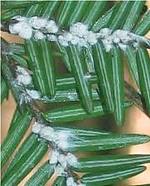
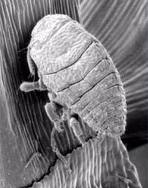
Wooly adelgid is a hemlock, Tsuga canadensis, parasite. It used to be classified as a protozoan, but, I believe, it is now called a true bug, Adelges tsugae. They look like little bits of cotton stuck to the undersides of hemlock needles. They can suck the tree dry if untreated. We have lost a few small trees to the disease, and having several in the yard, are concerned about saving the rest. The spraying is done spring and fall. Mineral oil, plain old mineral oil, coats the parasite and smothers it, at least to keep it in check. Some nasty pesticides may be used, we avoid them because of the dogs, and people.


Hemlock needles are flat and have a pair of stripes on the underside. The cones are small and droop from the ends of small branches. The white stuff is the parasite.

Photomicrograph of the bug. Yuck.


The big picture is from Wikipedia. The two smaller ones from a Google search.